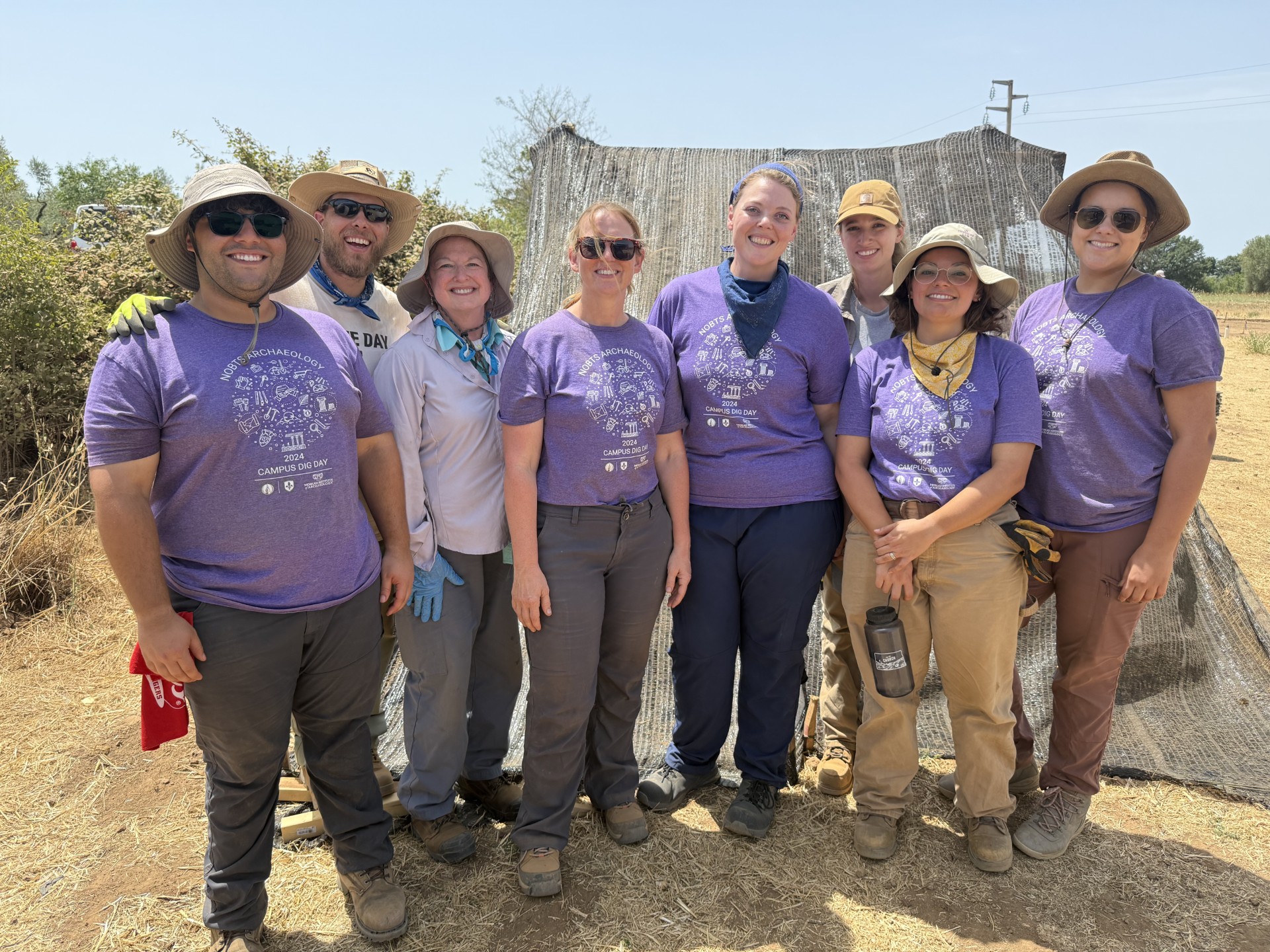
This summer, a group of students, graduates and staff from New Orleans Seminary’s Michael and Sara Moskau Institute of Archaeology participated in an excavation in Italy with the focus of searching for the remains of fallen World War II soldiers.
The excavation was a partnership between multiple institutions and the Defense POW/MIA Accounting Agency (DPAA). The DPAA is an agency with the U.S. Department of Defense which aims to recover and identify the remains of missing American personnel from past wars to the fullest extent possible.
This particular excavation featured archaeologists from LSU New Orleans (formerly University of New Orleans), Tulane, NOBTS and staff from The National World II Museum.
The trip further developed the relationship between the seminary’s archaeology institute and these neighboring institutions, building upon an excavation that NOBTS and others completed last summer in Duncan Plaza.
NOBTS brought 16 participants to the dig (taking place throughout June and July), which was investigating a location in central Italy believed to be associated with a crashed World War II aircraft and lost American pilot.
Jim Parker, executive director of the Michael and Sara Moskau Institute and professor of biblical interpretation and archaeology, described the trip as “an excellent opportunity for our excellent students.”
“The primary objective of getting our students on these trips is for them to learn how to excavate and all the practical things that entails,” Parker said. “It is a priority for our program that our students get this practical experience so they can become well-qualified archaeologists.”
In addition to practical experience, NOBTS classes were offered to students as part of the trip.
While much of higher education has abandoned the field of archaeology, Parker explained three crucial reasons why the seminary has invested in its archaeology program.
Parker said recent measures of success for the archaeology program include its recent partnerships in Israel, the new hiring of Gary Myers as associate director of the Institute and a steady influx of students.
Among those students is Meghan Williams, who graduated with her Master of Arts in Biblical Archaeology this May and immediately geared up for the Italy trip.
“Trips like this summer’s greatly help the reputation of our archaeological institute by allowing us to demonstrate the skill, knowledge and character that NOBTS students and graduates possess,” Williams said.
“As a recent graduate of the archaeology program, I find these types of trips absolutely necessary. Participating in these digs allows me to develop and hone my skills as an archaeologist, as well as build important professional relationships within the field.
“For me, the highlight of the trip was participating in a worthy mission. America would not be what it is today without the men and women who willingly laid down their lives as a sacrifice to gain and maintain our freedoms. There is something compelling and sobering about participating in a mission to recover the remains of one of those individuals, and playing a small role in honoring a fallen member of our military was the privilege of a lifetime.”
Williams echoed Parker’s sentiment on the important of the field of archaeology for Christianity.
“Archaeology is critical for Christians to study because it illuminates our understanding of God's Word by providing critical cultural context to even the most seemingly simple things and also serves as an apologetic for the skeptic,” Williams said.
“The NOBTS archaeology program is important because it trains students to approach archaeology from a scholarly perspective that is informed by our Christian worldview, allowing us to contribute meaningful papers that benefit the broader discipline while also deepening our understanding of the Scriptures.
“All archaeological finds must be interpreted, and many in the field of Biblical archaeology are not actually Christians. As students of God's Word, we ought to care about and invest in developing men and women of the Christian faith who are willing to enter the field of Biblical archaeology, not only to serve as missionaries to their colleagues, but also to bring a biblical perspective to the interpretation of finds.”
To learn more about the NOBTS archaeology program and Institute, click here.